Cambie Corridor Rezoning Explained: What the October 2025 Changes Mean for Your Property
In October 2025, Vancouver Quietly Rezoned Over 4,300 Properties Along the Canada Line
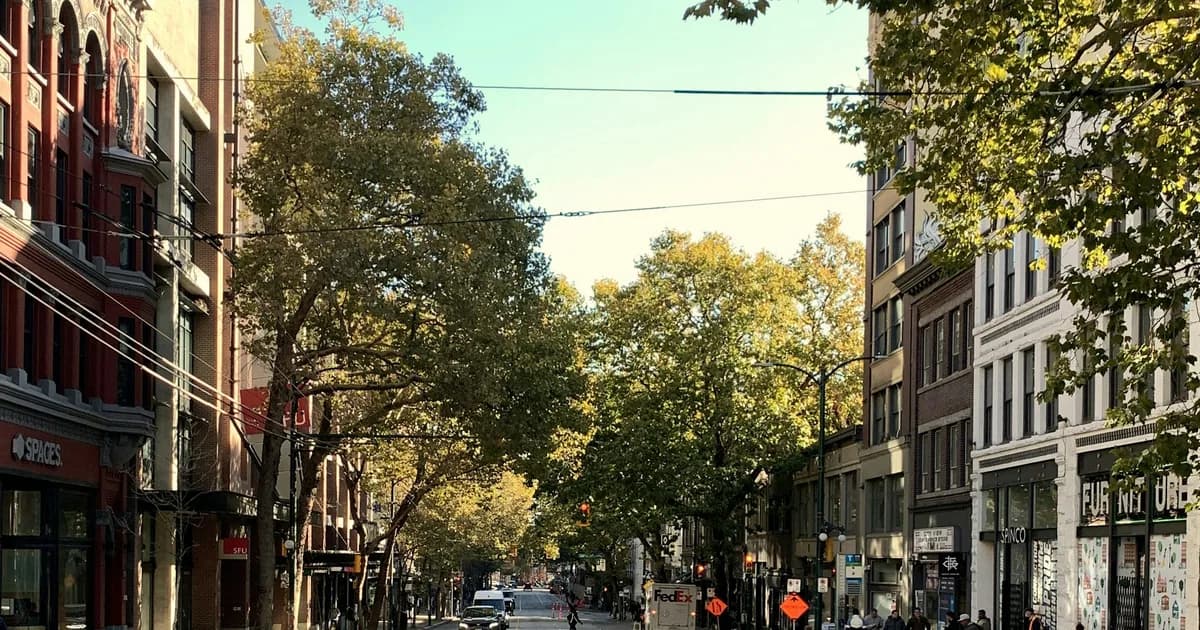
If you own a home along Cambie Street between Marine Drive and King Edward — in Oakridge, South Cambie, Langara, or Marpole — your property's zoning may have changed. You might not have even noticed.
In October 2025, Vancouver City Council approved a major update to the Cambie Corridor Plan. It's the most significant change to development policy along the Canada Line corridor since the original plan was adopted. And I know from talking with homeowners in the area that a lot of people are confused about what it actually means for them. Some are worried. Some are excited. Most just want a straight answer.
I'm Aparna Kapur, a realtor with Oakwyn Realty, and I specialize in the Oakridge and Cambie Corridor markets in Vancouver, British Columbia. I'm going to walk through what changed, what it means for your property, and what your options are — as plainly as I can.
What Is the Cambie Corridor Plan?
The Cambie Corridor Plan is the City of Vancouver's framework for managing growth along the Canada Line, the north-south rapid transit line running from Waterfront Station downtown to Richmond and YVR Airport.
The corridor stretches along Cambie Street from approximately King Edward Avenue in the north to Marine Drive in the south, encompassing the neighbourhoods of South Cambie, Oakridge, Langara, and Marpole.
The original plan, adopted in phases between 2011 and 2018, envisioned transforming the predominantly single-family neighbourhoods along the Canada Line into higher-density, transit-oriented communities. The reasoning was straightforward: Vancouver invested billions in rapid transit infrastructure, and the neighbourhoods around those stations should accommodate significantly more housing to justify that investment and address the city's housing shortage.
The October 2025 update accelerates that vision considerably.
What Actually Changed in October 2025?
Four things matter most. I'll take them one at a time.
### 1. Over 4,300 Properties Pre-Zoned for Higher Density
This is the big one. More than 4,300 properties along the Cambie Corridor have been pre-zoned, meaning their zoning has been officially changed to allow higher-density development without requiring a separate rezoning application.
Previously, a property owner or developer who wanted to build beyond what the existing zoning allowed had to go through a rezoning process — a lengthy, expensive, and uncertain undertaking that could take 18 to 36 months and cost hundreds of thousands of dollars in consultant fees, with no guarantee of approval.
Under pre-zoning, eligible properties can proceed directly to the development permit stage, skipping the rezoning step entirely. This saves approximately 12 months off the development timeline and eliminates a major source of uncertainty and cost.
What this means for you: If your property is one of the 4,300+ that has been pre-zoned, its development potential — and therefore its land value — has increased. You no longer need to gamble on a rezoning application. The density is already approved in principle. That's a meaningful change, even if you have no intention of selling right now.
### 2. Taller Towers Allowed Near Oakridge-41st Avenue Station
The update increased allowable tower heights near the Oakridge-41st Avenue Canada Line station from 15-18 storeys to 20-26 storeys.
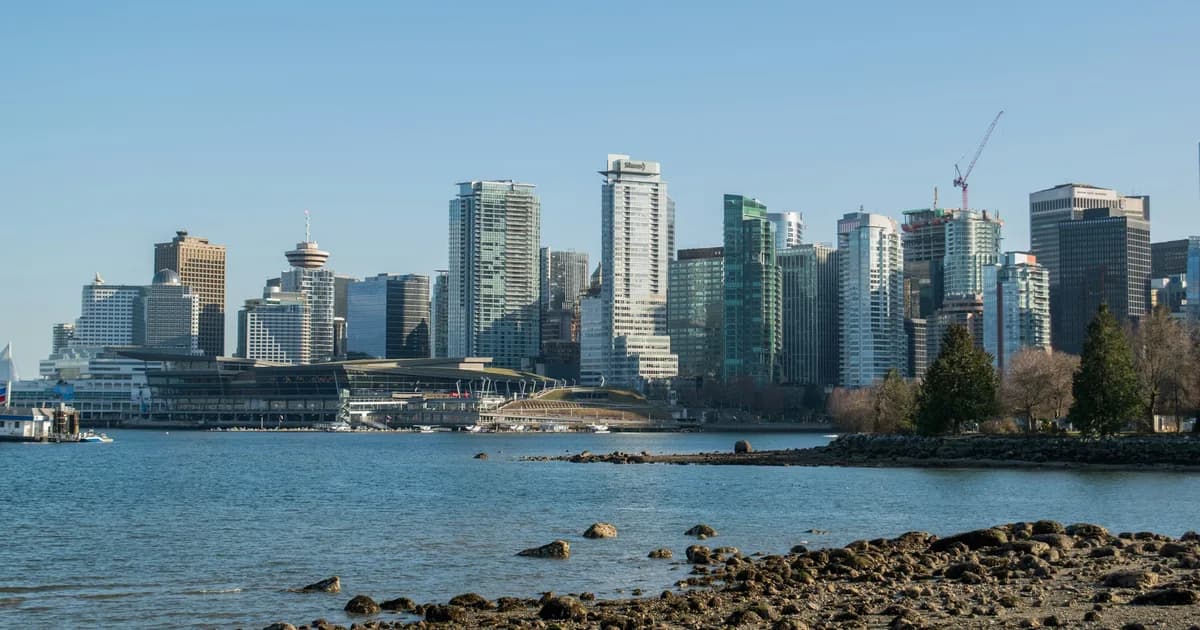
This is a direct response to the Oakridge Park development and the station area's designation as a municipal town centre. The City is signalling that the blocks immediately surrounding Oakridge Park should develop at a scale consistent with the development itself — genuine urban density comparable to areas like Brentwood in Burnaby.
Properties within the tower height increase zone now have significantly more development potential. More storeys means more units, which means higher land values. Developers will be actively seeking assembly opportunities in this part of Oakridge, Vancouver.
### 3. Streamlined Development Permit Process
Beyond pre-zoning, the update streamlined the development permit process itself. Projects that conform to the new zoning can proceed through a more predictable, faster approval pathway.
The combination of pre-zoning and a streamlined permit process means that the time from acquisition to construction start for a compliant project has been reduced by roughly 12 to 18 months compared to the previous framework.
For developers, this reduces carrying costs, financing risk, and project uncertainty. For homeowners, it means developers are more willing to pay a premium for assembled lots because the path to building is clearer.
### 4. Social Housing Requirement Reduced from 30% to 20%
Under the previous framework, rezoning applications along the Cambie Corridor were expected to include 30% of floor area as social or below-market housing. The October 2025 update reduced this requirement to 20%.
This change was pragmatic. The 30% requirement was making many projects financially unviable, particularly smaller-scale developments. Reducing it to 20% makes it easier for projects to proceed while still delivering meaningful affordable housing contributions.
The practical result: more projects will pencil out financially, which means more development activity, more housing supply, and more opportunities for both developers and property sellers along the corridor.
How Does Pre-Zoning Actually Work?
I get this question a lot from homeowners who received a notice and aren't sure what to do with it. So let me be specific.
Your property's zoning has been officially changed. You don't need to apply for anything. The new zoning is in effect now.
You can develop (or sell to a developer) under the new zoning. If you own a single-family lot that has been pre-zoned for a 6-storey apartment building, for example, you or a developer can apply for a development permit to build that 6-storey building without going through a separate rezoning.
Your property tax assessment may increase. BC Assessment values properties based on their "highest and best use." If your property has been pre-zoned for higher density, its assessed value — and potentially your property taxes — may increase to reflect the higher development potential, even if you are still living in a single-family home. I know this worries people, and it's worth checking with BC Assessment or your accountant.
You are not required to develop or sell. Pre-zoning doesn't force you to do anything. You can continue living in your current home for as long as you want. But the economics have changed: your land is now worth more to a developer than it was before, which gives you options you didn't have six months ago.
What Does This Mean for Property Values Along the Cambie Corridor?
The impact varies by location and property type, but the direction is clear.
Properties closest to Canada Line stations will see the largest impact. The tower height increases near Oakridge-41st Avenue and the pre-zoning of properties near other stations (King Edward, Langara-49th, Marine Drive) create significant new development potential.
Assembly sites — groups of adjacent lots that can be combined for a larger development — are particularly valuable. Developers need contiguous parcels to build efficiently, and holdout properties in the middle of potential assemblies can command significant premiums.
Detached homes on pre-zoned lots are now valued primarily for their land, not their structures. A 60-year-old bungalow on a lot pre-zoned for a 6-storey building is worth what a developer will pay for the land, which is often substantially more than the home's value as a residence.
Condos in existing buildings along the corridor may benefit from the neighbourhood improvements that come with new development — better retail, more services, improved streetscapes — but they don't directly benefit from the rezoning in the same way that land owners do.
How the R1-1 Zone and Multiplexes Fit In
Worth mentioning: the Cambie Corridor changes are happening alongside Vancouver's city-wide R1-1 rezoning, which allows multiplexes (up to 6 units) on virtually all former single-family lots across the city.
Since the R1-1 zone was implemented, the City has received approximately 370 applications for multiplex developments, representing roughly 1,500 new housing units. Many of these applications are along or near the Cambie Corridor, where the combination of transit access and R1-1 zoning makes multiplex development particularly attractive.
The two policies work together: the corridor plan handles the larger-scale, transit-oriented density near stations, while R1-1 enables gentle densification on the blocks between stations. The result is a more gradual transition from high-density station areas to medium-density residential streets, which is honestly a smarter approach than the all-or-nothing patterns we've seen in other parts of the city.
The Broadway Plan Connection
The Cambie Corridor Plan update connects directly to the Broadway Plan, which governs development along the Broadway corridor from Clark Drive to Vine Street, centred on the new Broadway Subway (Millennium Line extension).
The two plans share a common philosophy: concentrate housing density around rapid transit stations, reduce car dependency, and create complete communities with housing, retail, and services within walking distance.
For investors and developers, the intersection of the Broadway Plan and the Cambie Corridor Plan — particularly near the future Cambie-Broadway station area — represents one of the highest-growth zones in Metro Vancouver. Properties in this overlap area benefit from both plans' density provisions and two rapid transit lines.
What This Means if You're Thinking of Selling
If you own property along the Cambie Corridor, the October 2025 changes have likely increased your land's value. The question is how to capture that value — and when.
Options for sellers:
- •Sell to a developer now. With pre-zoning in place, developers have more certainty and are willing to pay accordingly. The reduced social housing requirement makes more projects viable, expanding the pool of potential buyers for your lot.
- •Participate in a land assembly. If your neighbours are also interested in selling, a coordinated assembly can command a higher per-lot price than individual sales. I've helped facilitate these conversations, and they can be quite productive when neighbours are on the same page.
- •Hold and wait. As each phase of development along the corridor completes and the neighbourhood improves, land values should continue to rise. But holding means continuing to pay property taxes on a potentially higher assessment.
My honest recommendation: Get a current land value assessment from someone who understands the new zoning — development land values, not comparable home sales. Many homeowners along the corridor are sitting on significantly more value than they realize, and the October 2025 changes have accelerated the timeline.
What This Means if You're Buying
More supply is coming. The pre-zoning and streamlined approvals will accelerate housing construction along the corridor. Over the next 5 to 10 years, thousands of new condos, townhomes, and rental units will be built in South Cambie, Oakridge, Langara, and Marpole. For buyers, this means more choice and potentially more competitive pricing in certain segments.
Transit-oriented locations are the future. If you're buying a home in Vancouver with a 10 to 20 year time horizon, being near a Canada Line or SkyTrain station is one of the strongest value drivers you can choose. The Cambie Corridor is purpose-built for this reality.
Consider adjacent areas for value. The blocks immediately surrounding stations will command the highest prices. For buyers seeking better value, look at properties one or two blocks further out — you still benefit from the neighbourhood improvements without paying the full station-area premium.
What This Means for Investors
The Cambie Corridor is one of the most compelling investment corridors in Metro Vancouver. The combination of pre-zoning, reduced development hurdles, increasing density, and Canada Line access creates a strong foundation for long-term appreciation.
Investment strategies to consider:
- •Existing condos near stations for rental income, benefiting from growing tenant demand as the corridor densifies
- •Pre-sale units in new developments along the corridor, particularly near Oakridge-41st and Langara-49th
- •Land acquisition for those with development expertise and capital, now that pre-zoning reduces risk
- •Multiplex development on R1-1 zoned lots near the corridor, combining the gentle density allowances with transit proximity
If You're Feeling Uncertain, That's Normal
Zoning changes can feel abstract until they show up on your property tax notice. If you own along the Cambie Corridor and you're not sure whether to sell, hold, develop, or join an assembly — that's a perfectly reasonable place to be. These are big decisions, and they deserve a careful, honest conversation.
I specialize in the Oakridge, South Cambie, Riley Park, and Cambie Corridor markets. If you want to understand how the October 2025 changes affect your specific property or investment plans, reach me at 604-612-7694 or through aparnakapur.com. I'll give you a straightforward, data-driven assessment — no pressure, just clarity.
Explore These Neighbourhoods
Let's Talk
Drop your name and number. I'll get back to you within 24 hours.